

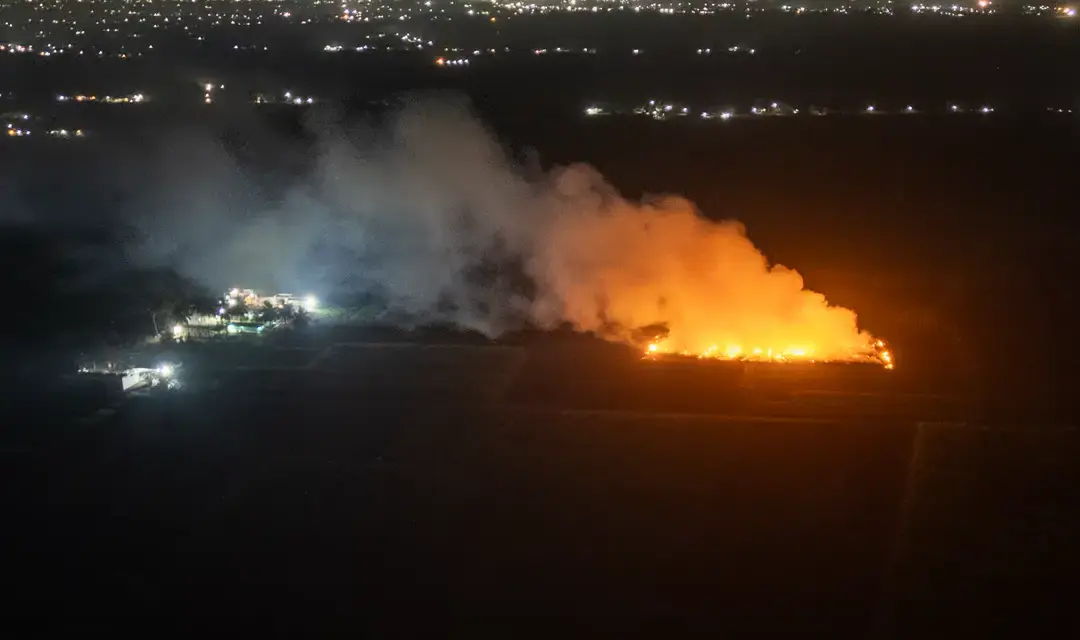
“Biomass burning is the single largest source of primary particulate pollution in India today. It’s not just a rural issue, it affects urban air quality just as much.”
— Chandra Bhushan, CEO, iFOREST
What Is Biomass Burning?
Biomass burning, which includes the combustion of household fuel, agricultural residue, municipal waste, and forest biomass is a major driver of India’s air pollution crisis. It releases a potent mix of harmful pollutants, including PM2.5, black carbon, carbon monoxide (CO), nitrogen oxides (NOx), and a range of volatile organic compounds.
Open burning of crop residues contributes an additional 6.5%, making biomass burning responsible for 55% of total PM₂.₅ emissions. Industry and power plants contribute about 37%, and transport contributes around 7%
(Source: iFOREST, 2023)
“It’s not just a rural kitchen issue anymore. The smoke from crop fires and domestic chulhas travels hundreds of kilometres, choking our cities,”
— Chandra Bhushan, CEO of iFOREST, in an interview on India’s air pollution dynamics (iFOREST, 2023).
PM2.5 Contribution by Source
Source: iFOREST & The Hindu, 2023
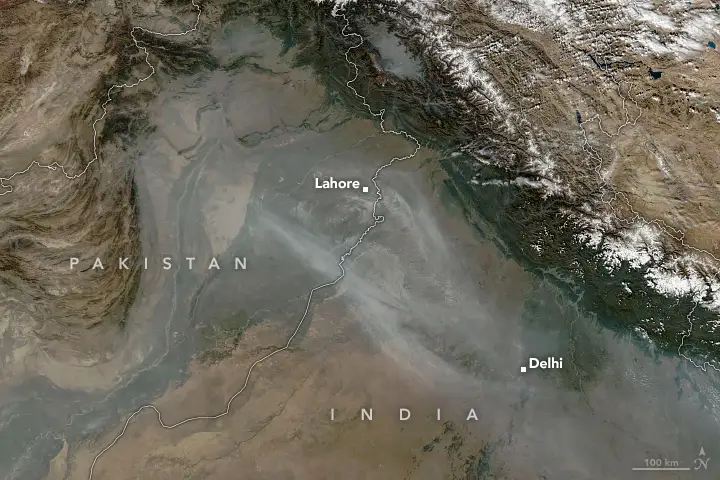
Satellite image showing thick smoke covering the Indo-Gangetic Plain, drifting from crop-burning regions in northwest India into Pakistan and northern India — notably toward Delhi and Lahore.
Source: NASA Earth Observatory
Seasonal Surges:
Why Smoke Chokes India Twice a Year
The Harvest Fire Cycles
April – May (wheat residue) and October–November (paddy residue) mark the peak times, especially in the Indo-Gangetic Plains. During this period, crop residue burning can contribute 40–60% of Delhi’s winter peak pollution.
In peak months, this pollution spike adds nearly 7 units of PM2.5 exposure across India, a level that, on its own, can severely strain lungs, especially in children and the elderly.
But the smoke doesn’t stay put. It drifts. And when it hits densely populated cities, it adds up to 75% more PM2.5 exposure compared to cleaner months. That’s like layering an already polluted environment with an invisible blanket of toxic air.
Recent Trends
A new study shows that biomass burning intensity in Northwest India has significantly increased over two decades. Interestingly, the peak burning window is shifting and shortening, reflecting evolving farm practices and changing air pollution patterns.
(Study: Progress in Earth and Planetary Science, 2025)
Seasonal Burning & PM2.5 Impact
| Season | Residue Type | Region | Impact |
|---|---|---|---|
| April – May | Wheat Stubble | Northwest India | Initial summer haze buildup |
| October – November | Paddy Stubble | Punjab, Haryana, Delhi NCR | Contributes up to 60% of Delhi’s winter PM2.5 |
| Peak Pollution Months | — | Across India | Adds up to 7 µg/m³ PM2.5 nationwide, 75% higher in cities |
Source: Nature Communications & iFOREST, 2023
Health in the Crossfire
“Cooking on biomass for just four hours a day is equivalent to inhaling 10–100 cigarettes.”
— Dr. Manas Ranjan Ray, NEERI (Times of India)
The inhaled pollutants include PM2.5 and carcinogens that trigger asthma, chronic bronchitis, heart disease, lung cancer, and even cataracts.
In 2015, indoor biomass burning led to an estimated 267,700 premature deaths, nearly 25% of all PM2.5-related deaths in India (The Lancet).
An additional 66,200 deaths came from agricultural burning.
Overall, India loses ~2 million lives annually to air pollution.
In Delhi, about 2.2 million children suffer irreversible lung damage (Greenpeace India).
Health Impact of Biomass & Air Pollution in India
| Health Indicator | Figure | Source |
|---|---|---|
| Biomass Cooking (4 hrs/day) | Inhaling 10–100 cigarettes | Times of India |
| Deaths from Indoor Biomass (2015) | 267,700 | The Lancet |
| Deaths from Agri Burning | 66,200 | The Lancet |
| Total Air Pollution Deaths (Annual) | ~2 million | CEEW / WHO |
| Children with Irreversible Lung Damage (Delhi) | 2.2 million | Greenpeace India |
Figures sourced from Times of India, The Lancet, Greenpeace India, and CEEW/WHO.
Voices from the Ground
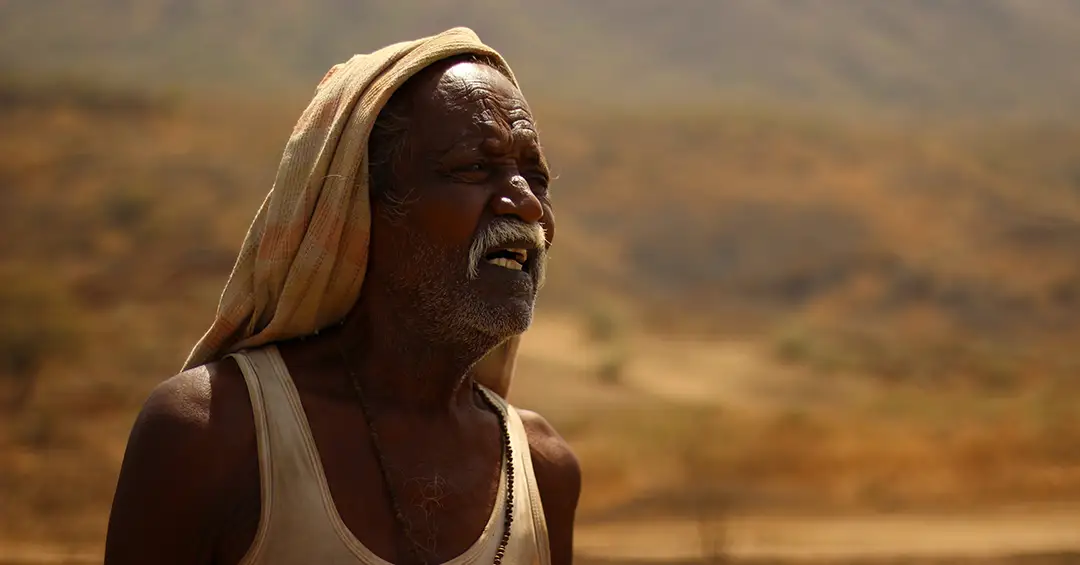
In Punjab, farmers like Swaran Singh face a harsh reality: crop residue burning is illegal, yet alternatives feel out of reach. As reported by Reuters:
“I will wait for a few days and if no one comes to clear it, then I will set it on fire… I cannot wait further, as I have to sow seeds to cultivate the next crop.”
— Swaran Singh, Bhikhi village, Punjab
At the policy level, a major study published in Nature by Dipoppa and Gulzar sheds light on how bureaucratic behavior can influence outcomes:
“Local bureaucrats are more likely to be incentivized to act when the wind blows pollution from crop fires to their home districts… Overall, the number of crop fires decrease by 10–13% after the wind switch pollutes their home district versus their neighbors.”
— Saad Gulzar, co-author
The study further quantifies health benefits:
“We estimate that 1.8–2.7 deaths in 1,000 children could be prevented with small steps to reduce crop fires.”
Source: Nature Communications
The Climate Connection
A recent report titled “Pathways to Net Zero in Punjab: The Critical Role of Non‑CO₂ Pollutants” (compiled by PSCST, IGSD, and TERI) offers a sobering snapshot of Punjab’s climate crisis:
“Between 2010 and 2023, Punjab experienced 128 heatwave days,” the report notes, highlighting the “urgent need to address short-lived climate forcers (SLCFs) like black carbon, methane, and particulate matter.”
(Times of India)
These pollutants intensified by biomass-burning are major drivers of local warming.
In addition, the study reported that an early-season heatwave in 2022 contributed to as much as a 25% reduction in wheat yields in parts of Punjab, compounding the agricultural and food security crisis.
Drilling deeper into emissions data, the same report reveals:
Agricultural burning alone accounted for 45% of PM2.5 emissions in the state, while industry contributed 39% and transport 12%.
Black carbon, a powerful short-lived climate forcer, was linked primarily to transport (38%), agriculture (33%), and industry (27%).
These findings show that biomass burning does far more than degrade air quality; it triggers a feedback loop, intensifying heatwaves and reducing crop productivity, particularly for heat-sensitive crops like wheat.
Human Stories:
When Pollution Becomes Personal
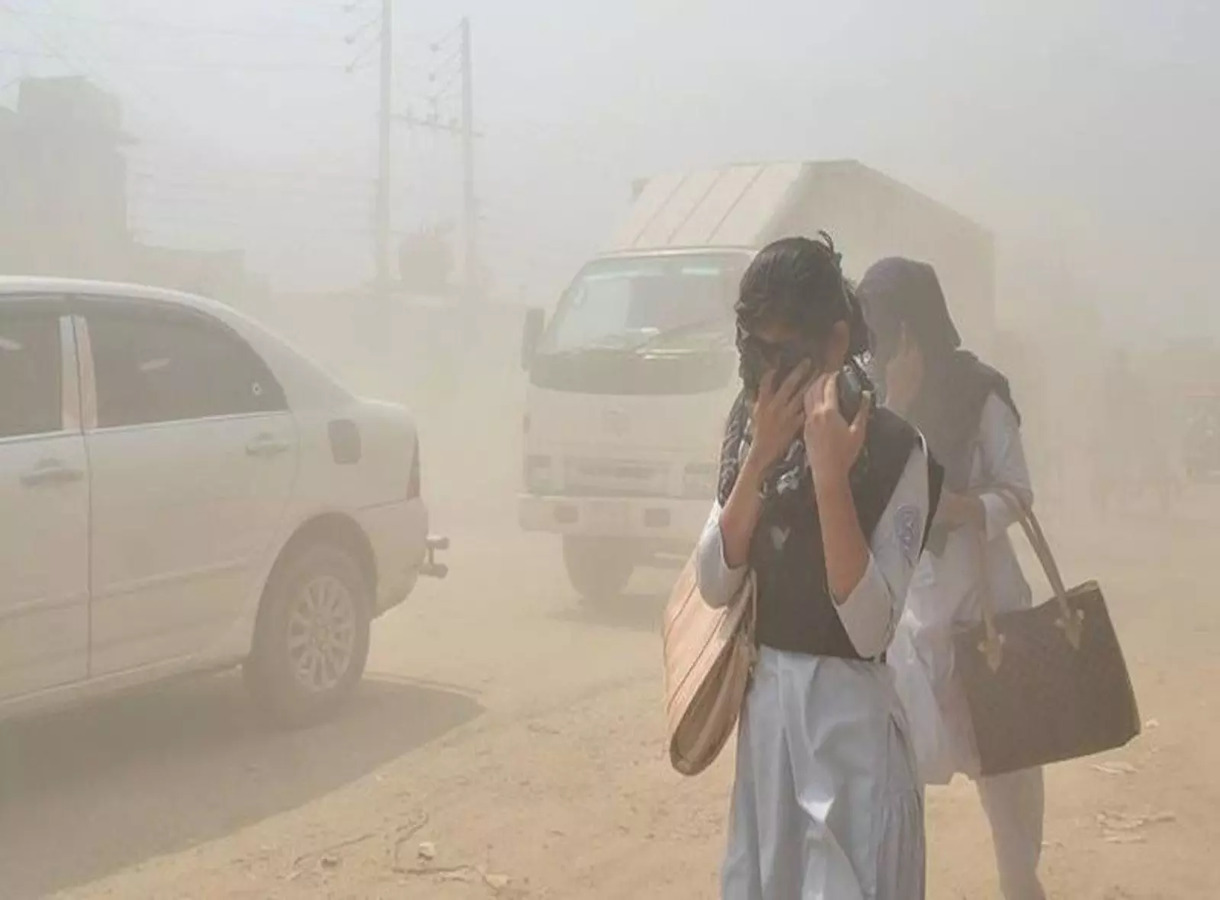
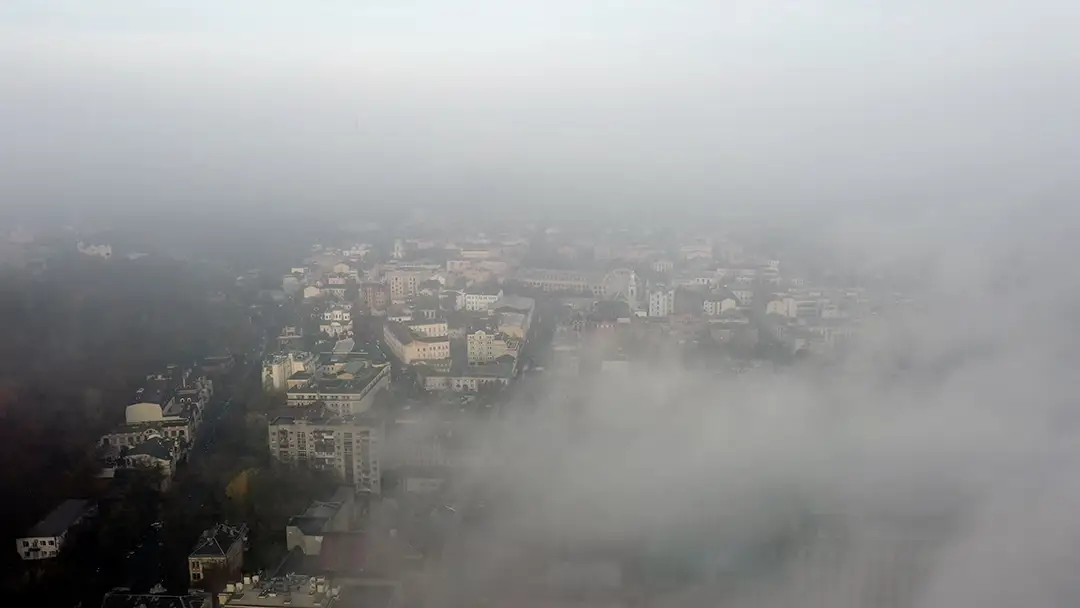
Behind long-term climate trends and air-quality statistics are real families facing daily crises. A powerful example comes from Delhi's hospitals, where the impact of smog on children is tragically visible.
Dr. Aheed Khan, a Delhi physician, recounts:
“In my last 24 hours duty, I saw babies coughing, children coming with distress and rapid breathing.”
Source: Al Jazeera
This glimpse into frontline healthcare encapsulates the suffering of families across the capital during severe smog episodes. One mother in Delhi’s smog-shrouded streets described her reality poignantly:
“Wherever you see there is poisonous smog…I feel so helpless,” said Julie Tiwari, as she rocked her baby in a makeshift ward.”
Source: Al Jazeera
These voices confirm what statistics alone cannot: that smog is not abstract; it is a public health crisis lived daily by millions.
What’s Still Missing
| Gap | Observation | Source |
|---|---|---|
| Public Awareness | Air pollution remains underreported and underestimated in rural media and policy debates | Greenpeace India |
| Health System Response | Hospitals face seasonal surges but lack structured air pollution protocols | Al Jazeera |
| Local Government Accountability | Administrative action often depends on whether pollution affects bureaucrats’ own districts | Nature Communications |
| Long-Term Vision | Fragmented efforts and short-term schemes lack a unified national air quality strategy | iFOREST |
Compiled from multiple public sources including Greenpeace, Al Jazeera, Nature, and iFOREST
Solutions That Work
The path forward requires airshed-based, regional collaboration, not isolated responses:
Satellite monitoring upgrades: ISRO now tracks burned areas rather than active fire points, better capturing stealthy burning events that farmers have time to avoid detection.
Technology & Incentives: Subsidized machinery, straw management tools like Happy Seeders and Super Straw Management Systems, and strict enforcement have helped Ludhiana reduce incidents by 13.9% in 2025 compared to 2024.
(Business Standard)Clean cooking initiatives: Despite high LPG coverage, 41% households still rely on biomass, emitting 340 million tonnes of CO₂ annually. Programs must go beyond free stove distribution to ensure lasting behavioral change.
(CEEW)Innovative biomass tech: At NEERI’s Energy Dialogues, experts emphasized technologies like pyrolysis, gasification, and microbial bioelectrochemical systems to replace inefficient biomass use.
“Improving these technologies is vital for vulnerable communities,” emphasized Director Dr. S. Venkata Mohan.
Source: Times of India reporting on Neeri’s Energy Dialogues, May 2025
India’s biomass problem is deeply rooted in culture, economics, and agriculture. Yet change is possible and happening.
From local boosters reducing stubble incidents to scientific forums rethinking biomass technology, there’s energy behind the solutions. Each district, household, and policy can be a turning point.
When farmers breathe easier, when children stop coughing, and when Delhi’s gray haze lifts, India takes a major step toward cleaner air and healthier lives.
Sources
- iFOREST – Biomass Burning Remains the Biggest Contributor
- The Hindu – Biomass Burning as PM2.5 Source
- Progress in Earth and Planetary Science – Seasonal Fire Trends
- Times of India – Biomass Cooking Health Risk
- The Lancet – PM2.5-Related Deaths
- Greenpeace India – 2.2 Million Children Affected
- Reuters – Farmers on Crop Burning
- Nature Communications – Bureaucrat Incentives Study
- Times of India – Punjab Heatwave Report
- Al Jazeera – Delhi Smog Photo Essay
- Business Standard – Stubble Burning Decline
- CEEW – Biomass & CO₂ Emissions
- NEERI – Energy Dialogues on Biomass (see official site)
- Times of India – Dr. S. Venkata Mohan on Tech for Communities
Image Source: iFOREST – Smoke & School Children Visual